Showing posts with label A1. Show all posts

Wednesday, 22 September 2021

WELCOME A1 STUDENTS!

 Hiya!

Welcome to the class blog. This blog is a good opportunity to practise your English! 

To consult it, you need to click on A1 and see all the exercises and material.

You can also click on School's stuff for general information about exams,'interesting webpages and so on...

I hope you like the blog.

'To break the ice', here you have some online exercises to practise phone numbers.


See you around,

Miguel 

Sunday, 6 May 2018

Listen 2 English: my new webpage for you to practise your listening

Hello all,
I've been taking several online courses in Madrid lately and now that I'm about to finish them (at last!), I want to share with you the result of my hard work. 
What I did was create a webpage for you to practise your listening autonomously according to the levels in the Common European Framework of Reference for Languages (A1, A2, B1, B2, C1 and C2). I have uploaded some self-correctable exercises and I will be uploading more as soon as I get more time.
The page is divided into six different sub-pages: "Inicio", where you have the address to my blogs, and some webpages for you to keep improving your English, and the levels of the Common European Framework of References, with exercises so that you can test your English listening skill. I have included videos of different topics, including songs, and excerpts from various TV series and even movies. 
Have a look at it and tell me what you think.
I'll add it to the list of interesting webpages on this blog (on the right-hand sind, at the bottom). Please, click on the link and give me your real opinion about this webpage. 
Next week, I will be showing some other contents that I've been creating recently.
See you around. 

Tuesday, 20 March 2018

Technology addiction

Watch this video and fill in the gaps with the appropriate words. A sentence has been given as an example:
https://study.com/academy/lesson/what-is-technology-addiction-definition-signs.html#lesson
0. The girl mentioned in the video is __seventeen__ years old. 

1. One of the first symptoms to detect technology addiction is when your daughter barely ____________________________.

2. When your daughter spends all the time playing videogames and she ignores her friend's request to ________ her at the beach, she'll probably have technology addiction. 

3. Last time your daughter was grounded without electronic devices she became ___________.

4. Technology addiction may be even more difficult to treat than __________________.

5. According to the video, technology addiction is an _____________ urge to use mobile phones and other electronic devices. 

6. Although technology addiction can be detected in the general population, it seems to be more ____________ among teenagers.

7. Technology addiction has not been medically ______________ so far. 

8. Apparently, technology addiction may be the result of both inherent genetic traits and elements _________________.

9. Technology ______________ are likely to have underlying health issues. 

10. Other than anxiety, insomnia and depression, technology addicts have also tendency towards _______________.

Thursday, 11 May 2017

What is couchsurfing ?

Listen to the video and try to understand what couchsurfing is. 

Mr. Bean is a funny character

Today, let's watch a video about the hilarious character, Mr. Bean. This time he goes to the hairdresser and to the swimming pool. You will watch half of the video and you will have to try and predict how the story ends using 'be going to'. I hope you like it. 


I also include the link to a funny game that you can play at home :
http://learnenglishteens.britishcouncil.org/study-break/games/wordshake

Let's revise places in the city with Kahoot

 https://play.kahoot.it/#/k/8b0b3eaa-75c9-4510-813f-58da3c797f7b

Tuesday, 18 April 2017

Back 2 school : Revision

Dear students,
Let's play a game to revise all the contents from the previous terms. 

Sunday, 16 April 2017

The verb 'get' and its multiple uses

The Easter holidays have just begun and I am using my first day to write a blog entry. I must not be much of a holiday fan myself, hehe. Anyway, I feel like devoting this entry to one recurrent verb in the English language, no other than the verb 'get'. My students of Básico I keep asking me what it means. They simply want a Spanish translation for this English verb, something which is just not possible. If you are learning Egnlish, teh verb 'get' will accompany you during your trip (just like the verb 'have', click on this link if you want to revisit my post about the verb 'have'). Let's begin. The verb 'get has multiple uses in English : 

1. 'Get' as a normal verb :
When you studied irregular verbs at school,  the  teacher probably told you that 'get' is a synonym for 'conseguir' ('achieve') and this can be true : 
- I got 10 in the English exam (=achieve)

However, 'get' has multiple meanings :
- I got an email from my boss (=received).
- We need to get bread for the dinner (=buy).
- John got a taxi to the airport (=take).
- We got a cold after skiing. (=catch).
- You still don't get it. (=understand).
- Now, he gets a lot of money in his new job (=earn).

'Get' can sometimes surprise it because it can work as an auto-antonym :
- I need to get Laura a present for her birthday (=buy).
- I got an awful present from Laura (=receive).

When 'get' is followed by the preposition 'to', it means 'arrive'.
- After ten hours, I finally got to the United States (=arrive).

2. 'Get' + adjectives 
This is a special use of 'get'. In this case 'get' works as a copular verb (followed by a subject complement). This use normally corresponds to reflexive verbs in Spanish (verbs finished in 'se').  In all these cases, 'get' is a synonym for 'become.' Have a look : 

ENGLISH
SPANISH
Get married
Casarse
Get divorced
Divorciarse
Get engaged
Prometerse
Get ready
Prepararse
Get angry
Enfadarse
Get bored
Aburrirse / hartarse
Get tired
Cansarse
Get lost
Perderse
Get dressed
Vestirse
Get naked
Desnudarse

There are other examples where 'get' doesn't correspond with reflexive verbs in Spanish : 
- The cinema is getting more and more expensive (=become).

3. 'Get' + prepositions/adverbs
In basic levels, 'get' is associated to means of transport :
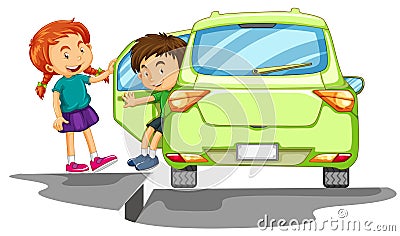
We use 'get on' to get on board all the means of transport (the bus, the train, the ship, the plane, the bike, the motorbike...), except the car (or similar). We use 'get off' to descend from the previous means of trasnsport. 
The children are getting on the bus.
From : https://clipartfest.com/categories/view/0507004ce4bf4eaff5c97d6bcbfa320ca3666a7d/getting-on-the-bus-clipart.html
The children are getting off the bus.
From : https://clipartfest.com/categories/view/84b97c67db0570d289c34b08697f3677886688d8/get-off-the-bus-clipart.html
The car, however, is different. With the car, van and taxi, we use 'get into' to go onboard, and 'get out of' to descend. 
The man is getting into the car.
From : https://clipartfest.com/categories/view/31da91539baba464590a8e8180955dac49f13e7c/getting-in-the-car-clipart.html

The boy is getting out of the car.
From : https://es.dreamstime.com/stock-de-ilustraci%C3%B3n-el-salir-del-muchacho-del-coche-verde-image70687530
However, this is going to get more complicated. 'Get' is the protagonist of a great deal of phrasal verbs, prepostional verbs and phrasal-prepostional verbs. 

Get up : I get up at six o'clock every day (=stand / sit up).
Get on (well) with : He doesn't get on well with his mother-in-law. They argue all the time (=have a good relationship). 
Get along : They argue all the time. They don't get along (=have a good relationship). 
Get by : I get by with 300 euros a month. / I can't speak Chinese well. I only get by in Chinese (=to survive, or manage to do something)
Get away (with) : He killed him and got away with it (=escape). 
Get across : He managed to get his message across (=communicate).
Get over : After a long week, he finally got over the flu (=recover).
Get around : He likes getting around the city (=travel). 
Get through : I have to get through with a lot of work (=finish).
                          I phoned you but I couldn't get through (=communicate).
Get back : I have to go. I need to get back to work (=return).

4. Get in passive sentences 
In English, the passive is normally formed with the verb 'to be.' However, only when the subject  is a person, we can use 'get' in the passive. Have a look at the examples : 
- In Spain, teachers get paid less than in England. 
- Paul got fired yesterday. 

5.'Get' in causative constructions
In English, we can use the structure 'passive subject' + verb 'get'/'have'+ object + participle, to indicate that someone does soemthing for you. It has passive meaning : 
'I got my hair cut yesterday by the hairdresser.' = The hairdresser cut my hair yesterday.
'I got my car painted lst summer.' = A painter painted my house last summer. 

Another possibility is to use the structure 'get + person +participle', for example, 'smoking will get you killed.'

Yet another option is to follow the structure : subject + verb 'get' + person + to-infinitive : 'I got my assistant to look for information about new technologies.' (=force / make) 'I made my assistant look for information about new technologies.'

6. Expressions with 'get'
There are some important expressions with 'get' my favourite being : 'you have to get going' (=get started), or get to know a person (=when you finally really know someone). 

Well, as you know, the verb 'get' in English is pretty complicated. I hope I have shed some light and that know you have got to understand it better, hehe. 
See you around.

Maundy Thursday

Want it or not, Easter has arrived in town. If you happen to be in Spain, you will probably have crossed paths with countless processions to honour the death and resurrection of Jesus Christ. However, as I explained in my last year's post about Easter (including videos and exercises related to Easter), Easter is not only a Spanish tradition. 
In this entry I will talk about one important tradition in the United Kingdom : Maundy Thursday. This day is the day before Good Friday, today it is ! On Maundy Thursday, two important events in the Christian religion took place. 
Firstly, it was the Last Supper where Jesus Christ commanded his disciples to love one another. "Maundy" comes from Latin "mandatum" (that is, order or command). That day was the first day of religious communion, so there are special services in churches to commemorate this day.  
Secondly, on this day, Jesus Christ washed the feet of his disciples himself to prove and pass on his humility. This is why still today some bishops and priests organize foot-washing rituals, washing the feet of the poor and some monarchs in the past devoted this day to washing the feet of the poor. Interesting tradition, don't you think ?
However, the tradition of monarchs washing the feet of their poor was lost and it has been replaced by money, indeed !  Nowadays, the Queen of England offers some coins (Maundy money) to men and women (precisely, a number of men and women equal to the age of the current age of the monarch). 


From : http://british-coin-price-guide.homelinux.com/British-Maundy-Money-Coin-Set-Price-Guide_files/Page2019.htm
Last year, 90 people received Maunday money. 
Here you have a video summarizing the traditions of Maunday Thursday : 


And here you have last year's Maunday Thursday ceremony. You can see the Queen handing over the Maundy money to some 90 men and women ! 

Well, As you can see, Easter has its quirky traditions outside Spain. I hope you have liked this post. I'm going to finish with a fast fact about Maundy Thursday (or Holy Thursday) : Unlike Good Friday, Maundy Thursday is not a public holiday in the United Kingdom.
Enjoy the rest of the Easter holidays and do not eat too many Easter eggs ! 

Thursday, 6 April 2017

Easter videos to test your listening comprehension

Did you read my post about Easter ? To practise your listening, I thought it would be a good idea to prepare a compilation of some videos of Easter. You will be able to see the different traditions and customs mentioned in my post :


Did you like the video ? It was really easy ! Not let's talk about British all over the world :

Here you have another interesting video !


And the last one : 

Did you like my compilation of videos ? Did you do the exercises ? I hope so ! Easter is over, which means Easter holidays are about to finish and we have to come back to ... school ! 

Easter is not only a Spanish tradition

Hello there,
Holidays at last ! It's been a long term for me but  I am finally on holidays : on Easter holidays ! There is a wide misconception that Easter is not "celebrated" in the English-speaking world. I agree that Spanish celebrations of Easter outnumber those in the English culture, but Easter traditions in the English-speaking countries are also important. Let's summarize some of the most important ones : 


1. Easter eggs : At Easter, it is customary to buy, give or exchange Easter eggs. Why ? The eggs represent Jesus Christ and when they are broken that represents his resurrection (the breaking of Jesus's tomb). In a wider sense, eggs are a symbol of rebirth and fertility.  There are eggs of various types nowadays, but chocolate eggs seem to have flooded the market. There are also traditional boiled eggs dyed with a lot of decoration. Hard-boiled eggs are very popular at Easter and some people even paint them and dye them :


From : http://headingforenglish.blogspot.com.es/2015/03/easter-eggs.html
Eggs were really popular because during Lent, neither meat nor eggs should be eaten. It was during Easter after Lent that people could 'feast' on eggs. 


2. Easter games 
Easter eggs are the protagonist of some really entertaining traditions :

- Egg tapping or egg knocking : In this fun game, you have to try to break another contestant's egg by tapping or knocking it with your eggs, but without breaking your egg. Yes, you hard-boile your eggs, you decorate them only to use them to break other people's eggs. Ironical ! 
From : http://blog.haven.com/2015/03/28/five-different-easter-traditions-to-try-out-with-your-kids/ 
- Easter hunt : This outdoor game is ideal for small children. Adults hide some eggs outside for children to look for them. These eggs are usually filled with chocolate or with other candies. So, in other words, it is like a treasure scavenger hunt but with eggs ! 
From : http://www.brooklinoptimist.org/optimist/programs/easter-egg-hunt.html
- Easter egg roll : It is a race where children must push the eggs with a spoon. It is usually held on Easter Monday in the White House Lawns. 

From : http://people.howstuffworks.com/culture-traditions/holidays-other/easter6.htm
- Easter bunny : It is a bunny that brings Easter eggs to children. Much like an Easter Santa Claus.
From : http://cmrrevents.com/wordpress/easter-trains/
3. Easter foods : There are a lot of different typical Easter foods, namely : 
    
Hot cross bun                               Chocolate Easter bunny

 
Simnel cake                                           Jelly beans

4. Important dates :
- Lent : Six weeks before Easter Sunday. During this time, people must refrain from eating one food of their liking and be disciplined (which includes being a good Christian, read the Holy Scriptures...). The first day of Lent is Ash Wednesday.
- Palm Sunday : On the Sunday before Easter. This day is celebrated with a traditional mass, and a parade where people carry palm branches to welcome Jusus Christ
- Maundy Thursday
It is the day preceding Good Friday. This day welcomes the Holy Week. In the past, the monarchs used to wash the feet of the poor in Westminster Abbey. This also served to commemorate the Last Supper. Nowadays, the Queen gives money to a group of old people very famous or important for the community.
- Good Friday : To commemorate Jesus Christ's crucifixion. 
- Easter Sunday : To celebrate Jesus's resurrection. Easter egg hunts are usually held on this date. 

5. Morris dance : It is a typically English dance to scare the spirits of winter away. 

6. Mass : Of course, churches organize quite a lot of Easter services at Easter, much like in Spain. 

Did you enjoy Easter in the UK and the USA. They have some really interesting traditions. What is your best ? Post a comment. 

Thursday, 30 March 2017

April Fools' Day

From the book : All About Britain
"April Fools ! " Should you hear these words, it means two things : 1) it is April, 1st; 2) someone has just pulled a prank on you ! Why ? It's April Fools' Day. On this day, people pull pranks and spread rumours and hoaxes. The media also invent some fake -flabbergasting - news and some people usually fall for them or buy them ! Yeah ! This is similar to Spain's Innocents' Day (28th December). This day goes back to the year 1957, where the BBC broadcast people picking spaghetti from plants. The audience thought it all was true and phoned the station to buy these plants ! Here you can watch it in the video : 

1. Now I will propose you a little game. I will enumerate five 'news items' and you will have to decide which one of them is TRUE ! Four of them will be hoaxes. Ready ?

a)  UFO lands in London
From : http://hoaxes.org/af_database/permalink/ufo_lands_near_london
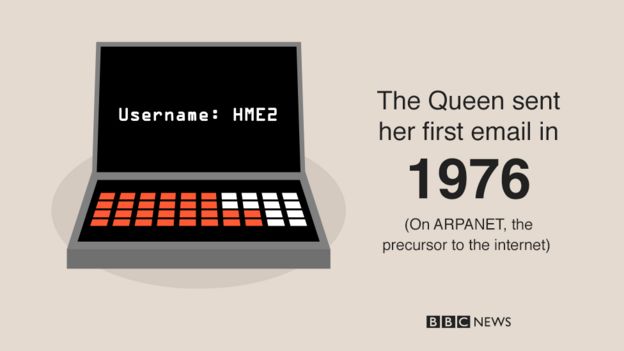
b) Queen Elizabeth sent her first email in 1976
From : http://www.bbc.co.uk/news/magazine-34185586
c) A new race of penguins that can fly have been discovered 


d) Big Ben will go digital in 2020

From : https://currentopinionsofnews.wordpress.com/2014/02/16/big-ben-to-go-digital/
e) Mummified fairy discovered ! 
From : https://www.kickstarter.com/projects/lebanoncircle/the-derbyshire-mummified-fairy-ooak-kit-and-dvd-wo

Answers: Only one of the news is true. Which one ? Well, letter b, indeed, surprising though it may sound ! If you want to see some of the most famous hoaxes of all time, click on this link.

2. Now let's learn some vocabulary for this day, related to tricks :
- Tell jokes / crack jokes = 'contar chistes'
- Trick someone / deceive someone / fool someone = engañar a alguien
- Play tricks on someone / pull pranks on someone = gastarle bromas a alguien
- Fall into a trap = 'caer en la trampa'
- Take the bait = 'picar el anzuelo'
- I don't buy it / I haven't fallen for it = 'no me lo trago' / 'no me lo creo'.
- He is a prankster / joker / jester / quipster = 'Él es un bromista.'
- April Fools ! = '¡ Inocente !' 
- April Fool pranks = 'inocentadas.'
- Spread a hoax = 'extender un rumor.'

3. To finish with, if you are much of a prankster, here you have a compilation of some interesting pranks of April Fool's Day. 


4. This video will prompt you to pull pranks on others. I hope you never put these "inspiring" ideas into practice.

I hope you have learnt a lot about April Fools' Day. Which is your favourite prank ? Post it on a comment ! 

Monday, 13 March 2017

Practise your English with games and tests (1º Básico)

Dear students of Básico 1,
Here you have some good practice for you to practise your English now that the exams are near. 
Enjoy it : 
P.S. There are some games, so play games in English ! 
https://elt.oup.com/student/englishfile/elementary3/?cc=global&selLanguage=en

Saturday, 11 February 2017

British and American English

Dear students,
One of your classmates shared this article with me and the rest of the class and now I'm going to share it with you via blog. In this article, you can clearly appreciate the differences between British and American English. It's a good opportunity for you, don't miss it and click on the link .
Thanks Miguel Ángel Mediavilla. 

Thursday, 9 February 2017

Who wants to live forever ?

Dear students of 1º Básico,
by clicking on the picture you will practise the song that we saw in class with Lyrics Training. what are you waiting for ?